

EV chargers
EV charger grants and income tax relief in Seville, Spain: what is still available in 2026
EV charger grants in Seville, Spain come down to one in 2026: the 15 % income tax (IRPF) deduction, worth up to 600 euros, for installations completed before 31 December 2026. MOVES III closed in 2025 and the Auto+ programme does not cover chargers. Here is how to make the most of the deduction.
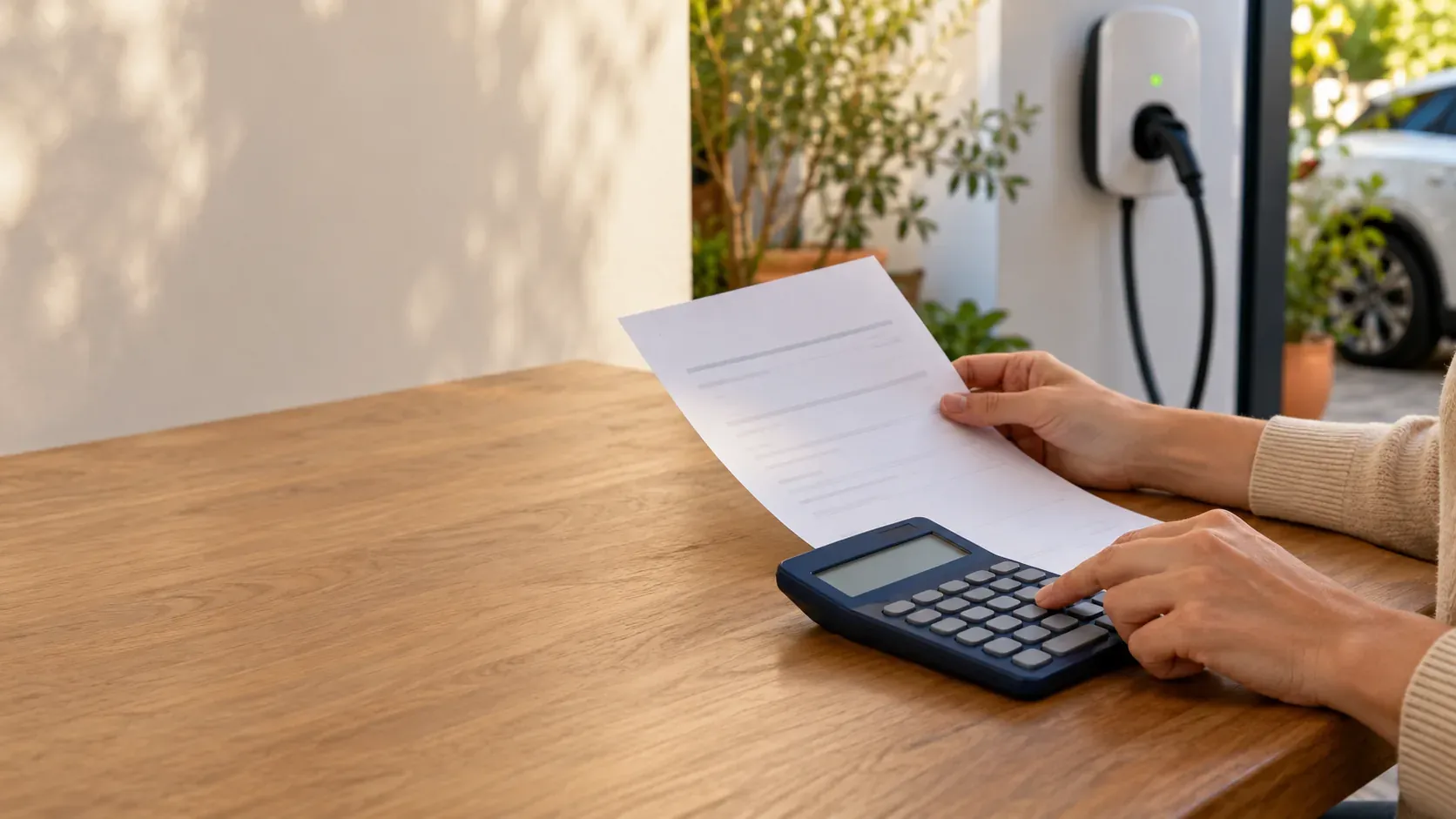
EV charger grants in Seville, Spain: the real picture on 24 October 2026
Many websites still advertise MOVES III as if it were open. It is not. This is the real situation for grants towards a home charging point in Andalusia on 24 October 2026:
| Scheme | Status | Does it cover the charger? |
|---|---|---|
| 15 % income tax (IRPF) deduction | Available until 31/12/2026 (RDL 7/2026) | Yes, up to 600 euros |
| MOVES III | Closed to applications on 31/12/2025 | No longer possible to apply |
| Auto+ programme (Royal Decree 609/2026) | Open for vehicles | No, it only subsidises cars |
| Andalusian regional call 2026 | No call open for private individuals | No |
| Seville City Council | No direct grant found | No |
The 15 % income tax deduction for your charger
It is the only help still available to a private individual in 2026. This is how it works, according to additional provision 58 of the Spanish Income Tax Act (Ley del IRPF):
- How much: 15 % of what you pay for the installation (charger, materials, labour, necessary building work and certificate), with a maximum base of 4,000 euros a year. The most you can save is 600 euros.
- Which payments: amounts paid from 30 June 2023 to 31 December 2026.
- When it applies: on the return for the year in which the installation is completed. A charger finished in 2026 is deducted on the 2026 return, which you file in 2027.
- Where: in a property you own (main home, second home or parking space) that is not used for a business activity.
- How to pay: bank transfer, card, named cheque or payment into an account. Not in cash.
- Who installs it: a registered installer company (empresa instaladora habilitada), whose tax number you enter in Renta Web together with the cost and the completion date.
- If there is a grant: it is subtracted from the cost before the 15 % is applied.
The deduction is claimed on a Spanish IRPF return, so if you are unsure about your own tax position, check with your tax adviser (gestor or asesor fiscal).
Example: if your home EV charger for a house costs 1,200 euros, you deduct 180 euros. If the EV charger in your communal garage costs 1,800 euros, you deduct 270.
How the deduction survived in 2026
The history explains why there is so much confusion, even among Spanish companies. Royal Decree-law 16/2025 of 23 December extended the deduction into 2026, but Parliament did not ratify it in January. Royal Decree-law 2/2026 tried again, was not ratified either, and was repealed by its publication in the Official State Gazette (BOE) on 28 February 2026. Finally, Royal Decree-law 7/2026 of 20 March, published in the BOE on 21 March, in force from the 22nd and ratified on 26 March 2026, extended it until 31 December 2026. We explain it step by step in our article on the EV charger tax deduction in Spain in 2026.
What happened to MOVES III
MOVES III covered 70 % of the cost of a charging point for private individuals and communities of owners (80 % in municipalities with fewer than 5,000 inhabitants). In Andalusia, applications were open from 15 July to 31 December 2025. In February 2026 the Agencia Andaluza de la Energía raised the budget to 94.02 million euros, with 19.83 million for charging infrastructure, but only to serve applicants already on the reserve list. There is no new application period. Anyone with a grant awarded must justify it by 31 December 2026 at the latest.
The Auto+ programme does not pay for your wallbox
The successor to MOVES III in 2026, the Auto+ programme (Royal Decree 609/2026), helps you buy the car, not install the charger. Charging has been moved to a separate programme, MOVES Corredores, designed for main roads and high-power stations. If you buy an electric car with Auto+, you pay for the home charger yourself and deduct 15 %.
Other ways to save
- Energy saving certificates (CAE): some installers and electricity suppliers pay between 150 and 400 euros per charger installed in exchange for the certified energy saving. Ask us whether it applies in your case.
- Solar panels: if you install the charger together with photovoltaics, the home also keeps the energy efficiency deductions extended by the same Royal Decree-law. We cover it in solar EV charging.
- Communities of owners: the communal EV charging backbone no longer has a grant, but each neighbour who connects a charger to it can claim their own deduction.
What we give you
With every installation you receive an itemised invoice in your name with our tax number, the electrical installation certificate (boletín) registered with the Junta de Andalucía (the regional government) and a note with the details Renta Web asks for. We recommend paying by bank transfer and keeping everything for four years, the period during which the tax office can review the deduction.
If you want to benefit, the key is the date: the installation must be finished before 31 December 2026, and in a communal garage you also need to allow time for the prior notice to the comunidad (the community of owners). Follow updates on our blog and see every option on the EV charger installation page.
Where we do this most
Electrician in Seville (Sevilla), Spain: every district, explained for newcomers
Electrician in Dos Hermanas, Seville, Spain: the town, Montequinto and Entrenúcleos
Electrician in Mairena del Aljarafe, Seville, Spain: flats, villas and new builds
Electrician in Tomares, Seville, Spain: villas, pools, solar panels and EV chargers
Electrician in Sevilla Este, Seville, Spain: EV chargers and brand-new flats
Frequently asked questions
Are there any grants for installing an EV charger in Spain in 2026?
For a private individual, only the 15 % income tax (IRPF) deduction. MOVES III closed applications on 31 December 2025, the Auto+ programme subsidises vehicles and not chargers, and as of 24 October 2026 there is no regional call open in Andalusia for private charging points.
How much can I deduct for my charger?
Fifteen per cent of what you pay for the installation, with a maximum base of 4,000 euros a year. The highest possible deduction is therefore 600 euros. If your installation costs 1,500 euros, you deduct 225 euros on your Spanish income tax return.
Until when is the deduction available?
Until 31 December 2026, under Royal Decree-law 7/2026 of 20 March, ratified by the Spanish Parliament on 26 March. The installation has to be finished before that date, because the deduction applies to the year in which the work is completed.
Can I claim the deduction for a charger in my garage space?
Yes, as long as the parking space belongs to you and you do not use it for a business activity. It also applies to your main home or a second home, which matters if you spend only part of the year in Seville. A tenant cannot claim it, because the property is not theirs.
What if I paid in 2025 and the installation is finished in 2026?
You claim it on your 2026 return, filed in 2027, because the completion date is what counts. That is why it is wise not to leave the charger until December: if the work slips into the following year, there is currently no deduction planned for 2027.
What documents do I need to claim it?
An itemised invoice in your name, the registered electrical installation certificate (the boletín) and proof of payment by bank transfer, card or named cheque, never cash. In the Renta Web tax portal you enter the cost, the completion date and the installer company tax number. Keep everything for four years.
What if I applied for MOVES III in 2025?
In Andalusia, the regional energy agency (Agencia Andaluza de la Energía) increased the budget in February 2026 to serve the reserve list, without opening a new application period. If you receive the grant, it is taxed as a capital gain and is subtracted from the cost before the 15 % deduction is calculated.
Related services
Home EV charger for houses
EV charger installation in Seville, Spain for your villa or townhouse is a one-day job: a dedicated circuit from your fuse board, its own protection devices, a 7.4 to 22 kW wallbox and a boletín registered with the Junta de Andalucía. In 2026 you can still deduct 15 % in your Spanish income tax return.
EV charger in a communal garage
An EV charger in a communal garage in Spain only requires you to notify the comunidad (the homeowners' association): no vote, no permission. We run the line from your meter to your parking space in Seville, install the charger with its protection devices and register the boletín.
Communal EV charging backbone
A communal EV charging pre-installation in your building's garage in Seville, Spain sorts out the wiring once and for all: one backbone line, one charging board and a load manager, so each neighbour can later connect their own charger paying only their share and their own electricity.
Solar EV charging
A solar EV charger in Seville, Spain lets you charge your electric car with the energy your roof does not use. We install the wallbox with its meter so it charges only from solar surplus, or from surplus plus a minimum from the grid, and if you do not have panels yet, we carry out the complete installation.
Electrical certificate (boletín)
The electrical certificate in Spain, known by everyone as the boletín and officially the CIE (certificado de instalación eléctrica), is the document a registered installer company signs to confirm that your installation meets the regulations. You need it to connect the electricity, increase your power or change the account holder with an old installation. We inspect, certify and register it with the Junta de Andalucía in Seville.
Need an electrician in Seville, Spain?
Call us or send a WhatsApp message with a photo of the job. You get a fixed quote before any work starts.