
Glossary
Solar inverter (inversor solar)
The unit that converts the direct current from solar panels into 230 V alternating current for the home and manages the grid connection, surplus energy and, on hybrid models, the battery.
What a solar inverter is
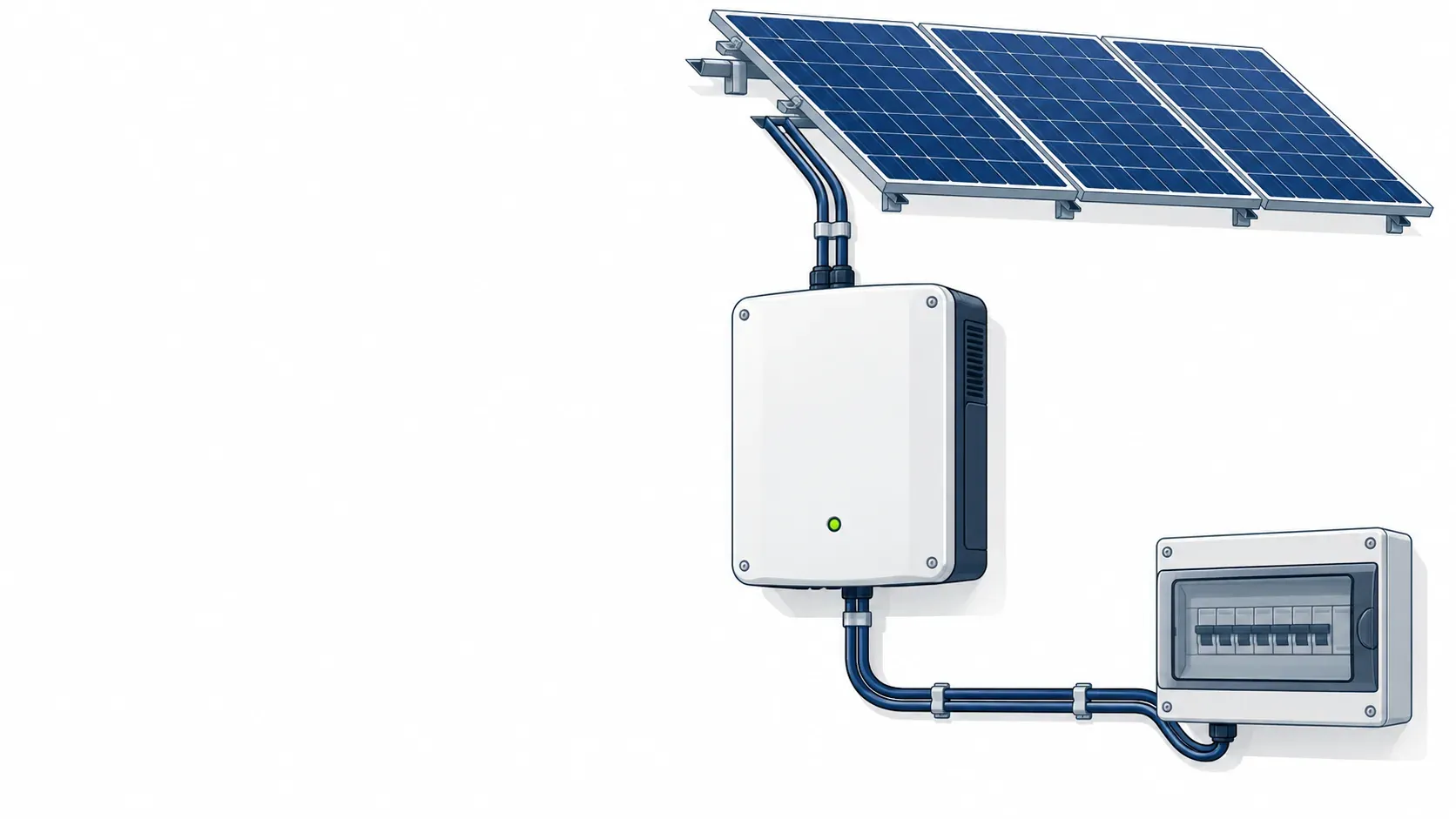
The inverter is the heart of a self-consumption (autoconsumo) system. Panels produce direct current, but your home runs on 230 V alternating current. The inverter makes that conversion, synchronises the system with the grid, tracks the panels’ maximum power point at every moment and decides which energy goes to the house, which is exported as surplus and, if there is a battery, which is stored.
Types of inverter
- String: one unit for all the panels, connected in series. The most common and cheapest option on roofs without shade.
- Microinverters: a small inverter per panel. If one panel is shaded, the rest lose nothing. Useful on roofs with several orientations or with chimneys and aerials.
- Hybrid: it also manages a home battery. If you may add a battery later, choose one from the start.
Inverter power is given in AC kW and is usually a little lower than the kWp of the panels.
Protection and location
ITC-BT-40 covers generating installations. The inverter needs protection on the DC and AC sides, surge protection and, in some cases, a type B RCD. Place it somewhere ventilated and shaded, because heat cuts its output and its lifespan.
Faults and price
It is the component that fails most in a solar system: an error in the app or zero production usually points to the inverter or its protection. Its price is included in the cost per kWp of the system, which in 2026 runs from 850 to 1,300 euros per kWp.
Who to call
If your inverter shows an error, is not producing or you want to add a battery, see solar panels and solar panel maintenance in Seville, Spain.
Related services
Solar panels for self-consumption
We install solar panels in Seville, Spain and the surrounding province on a turnkey basis: we study your consumption and your roof, fit panels, inverter and protection devices, and handle the legalisation and the compensation for your surplus energy. With Seville's sunshine, each kW installed saves an average of about 189 euros a year.
Solar EV charging
A solar EV charger in Seville, Spain lets you charge your electric car with the energy your roof does not use. We install the wallbox with its meter so it charges only from solar surplus, or from surplus plus a minimum from the grid, and if you do not have panels yet, we carry out the complete installation.
Related questions
Need an electrician in Seville, Spain?
Call us or send a WhatsApp message with a photo of the job. You get a fixed quote before any work starts.