

Glossary
Surge protector or SPD (protector de sobretensiones)
Device fitted in the fuse board to protect the installation and appliances from voltage rises. The transient type diverts brief spikes from lightning and network switching to earth; the permanent type cuts the supply if the voltage stays high.
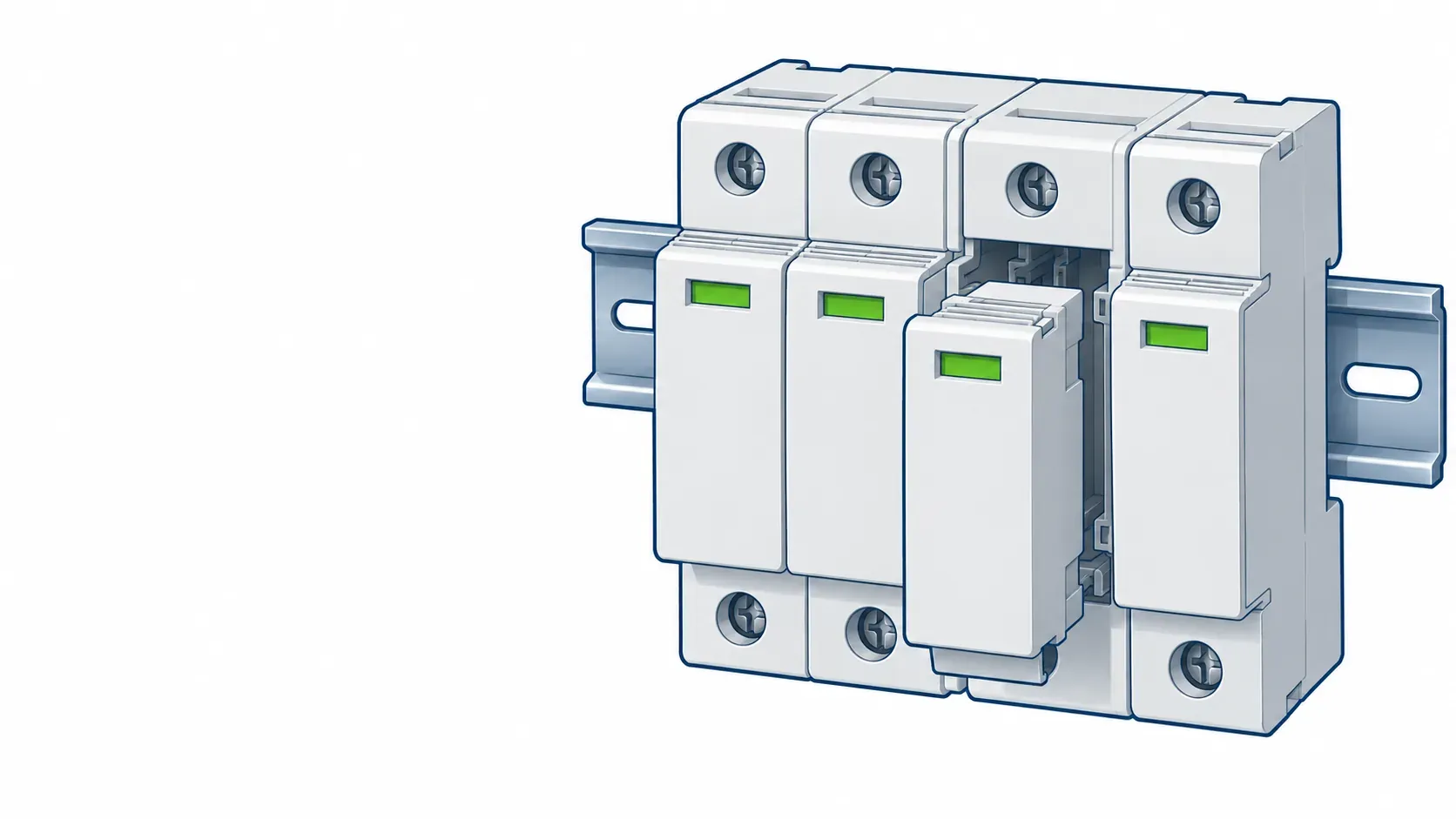
What a surge protector does
There are two different devices, often combined in one module in the fuse board:
- Transient surge protector (also called SPD or DPS). Faced with a microsecond voltage spike, such as one arriving through the network during a storm, it becomes conductive and diverts that energy to earth before it reaches your appliances.
- Permanent overvoltage protector. It checks that the voltage does not stay high for seconds or minutes, for example after a broken neutral, and cuts the supply if it does.
The transient type needs earthing (grounding) in good condition to work.
Regulations
ITC-BT-23 of the REBT governs surge protection and makes it compulsory in new installations in the cases it sets. Devices follow standard UNE-EN 61643. ITC-BT-52 also requires it for EV chargers, against temporary and transient overvoltages, and it is compulsory in self-consumption solar installations.
Which type your home needs
A home usually has a combined transient plus permanent protector in the main fuse board. If you have an EV charger far from the board, a second protector is fitted next to it, coordinated with the first. Summer storms in Seville make it worthwhile, especially with expensive equipment plugged in.
What it costs
As a guide, the protector costs 60 to 200 euros and fitting 50 to 100 euros, plus VAT, depending on the model and free space in the board. See electrical safety in Seville, Spain.
Related services
Storm damage
If a storm or a power surge has left your home without electricity, burnt out the router or the appliances, or the RCD will no longer reset, a storm damage electrician checks the installation in Seville, Spain, replaces the damaged protections, tests the appliances and gives you a report for your home insurance claim.
Fuse board replacement
A consumer unit replacement in Seville, Spain is the upgrade that adds the most safety without building work: main switch, several RCDs, one breaker per circuit and surge protection. We replace your old fuse box, or a board with a single RCD, with a new fuse board (breaker panel) sized for your power and your circuits.
Need an electrician in Seville, Spain?
Call us or send a WhatsApp message with a photo of the job. You get a fixed quote before any work starts.