Glossary
Earthing or grounding (toma de tierra)
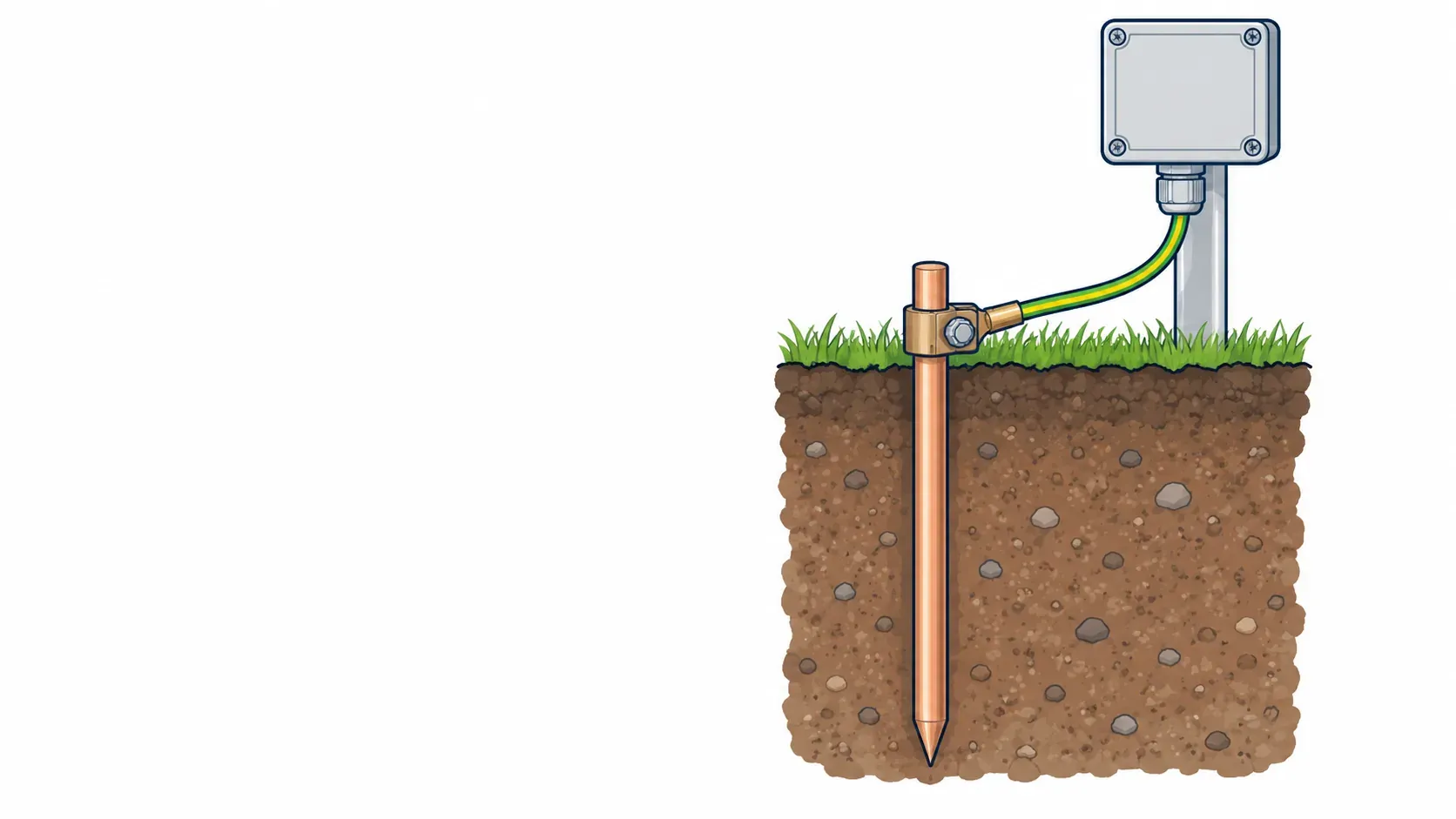
Connection of the electrical installation to the ground, through earth rods or a buried conductor, so that leaking current is carried away and the RCD can act before anyone gets a shock. In the US it is called grounding.
What earthing is for
Every appliance with a metal casing and every socket is connected to the earth through the green and yellow cable. If an internal wire touches the casing, the current finds an easy path to the ground instead of through your body. That leak trips the RCD (diferencial). Without an earth, the casing stays live until someone touches it.
It is also essential for the surge protector, which diverts voltage spikes to earth.
What it consists of
- Earth rods driven into the ground or a buried copper conductor, usually under the building’s foundations.
- Main earth line to the meter room and the fuse box.
- Protective conductor on every circuit, to each socket and appliance.
It is governed by ITC-BT-18 and, for homes, ITC-BT-26.
How to tell if you have it
Earthed sockets have two metal side clips. A green and yellow cable should reach the fuse box. But having the cables does not guarantee the earth works: the earth resistance has to be measured with an earth tester and continuity checked to every point.
Is it compulsory?
Yes. The REBT requires installations to be earthed, and it is one of the first things checked when issuing a boletín or rewiring an old flat. Many old flats in Seville have none. If taps or the washing machine give you a shock, the earth is probably missing or broken.
Guide price
Installing or improving the earthing costs an estimated 250 to 600 euros plus VAT, depending on access to the ground. See electrical safety in Seville, Spain.
Related services
Earthing
Earthing (grounding in the US, toma de tierra in Spain) is what allows your RCD to protect you from an electric shock. In Seville, Spain we carry out earthing installation and testing in flats and houses: earth rods or buried conductor, main earth line, connection of every circuit and a resistance measurement to confirm it works.
Electric shocks from taps
If you get electric shocks from taps (faucets), the shower, the washing machine or the fridge, a metal part is live and the current is not being carried to earth. That is a real risk of electrocution. In Seville, Spain we check the earthing (grounding), the protective conductors and the insulation of your appliances to find the fault and remove it.
Related questions
Need an electrician in Seville, Spain?
Call us or send a WhatsApp message with a photo of the job. You get a fixed quote before any work starts.