Glossary
Three-phase supply (trifásico)
Electricity supply with three phases and a neutral, with 400 V between phases and 230 V between each phase and neutral. Used in industrial units, shops, communal buildings and homes with large loads, such as 11 or 22 kW chargers.
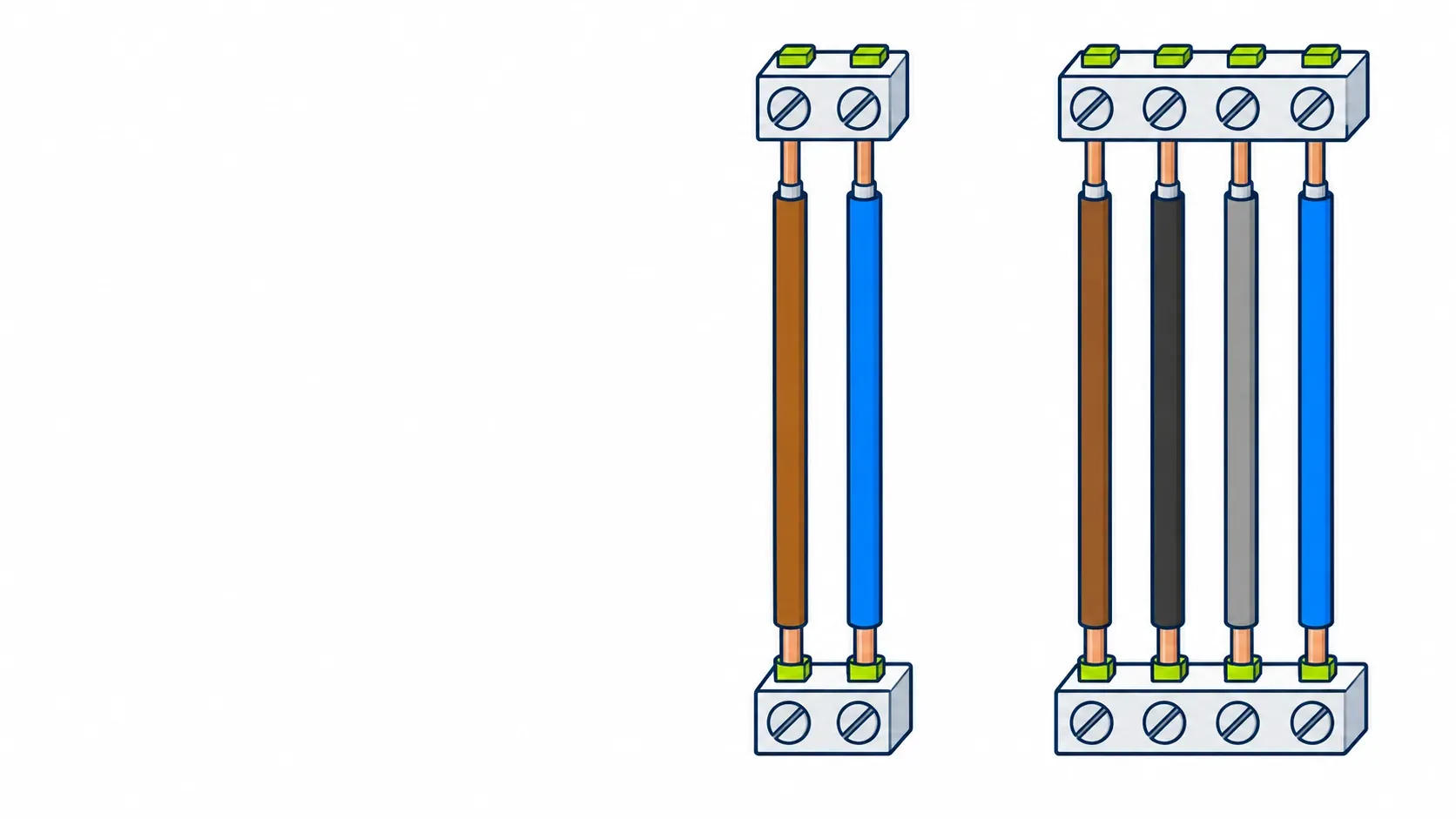
What three-phase means
Three phases and a neutral arrive. Between two phases there are 400 V and between each phase and neutral, 230 V. Household appliances still run at 230 V, connected to one phase, while three-phase equipment such as motors, 11 kW chargers or some heat pumps use all three at once.
Advantages
- More power available with thinner cables than single-phase.
- 11 and 22 kW chargers. An 11 kW charger adds about 60 km per hour of charging.
- More efficient motors with smoother starts, which is why it is standard in industry, pumps and lifts.
- Multiple chargers in businesses, hotels and garages.
Phase balancing mistakes
On three-phase, 230 V appliances must be spread across the three phases. If almost everything hangs off one, that phase overloads while the others are idle, and the protection trips even though total power has not been exceeded. Switching to three-phase means reorganising the circuits in the fuse board.
Cost of switching
Changing from single-phase to three-phase requires adapting the riser cable, the fuse board and the contract, and issuing a boletín. As an estimate, the work costs 600 to 2,000 euros depending on the riser cable length, and the boletín averages about 186 euros. See business and industry in Seville, Spain.
Related services
Single to three-phase
A single-phase to three-phase upgrade in Seville, Spain is what you need when your home or business is going to have very large loads: an 11 kW EV charger, certain aerothermal heat pumps or machinery. We adapt the riser cable, fit a three-phase fuse board, share the circuits between the phases and handle the boletín with the distributor.
Shops and offices
An electrical contractor in Seville, Spain for shops and offices: fuse board, lighting, sockets, air conditioning lines, emergency lighting and boletín, with the electrical documents the opening licence requires. For shops, offices, clinics, academies and franchises, including international companies setting up in the city.
Home EV charger for houses
EV charger installation in Seville, Spain for your villa or townhouse is a one-day job: a dedicated circuit from your fuse board, its own protection devices, a 7.4 to 22 kW wallbox and a boletín registered with the Junta de Andalucía. In 2026 you can still deduct 15 % in your Spanish income tax return.
Related questions
Need an electrician in Seville, Spain?
Call us or send a WhatsApp message with a photo of the job. You get a fixed quote before any work starts.